

A practical guide for modern Australian lenders
Approving loans is not the hard part. Managing them properly is.
That might sound like a bold claim, but anyone who has spent serious time inside a lending business knows it to be true. The mechanics of saying yes to a loan are well understood. What comes after the compliance trail, the servicing, the arrears management, the audit readiness, is where operations either hold together or begin to fracture.
In Australia, this pressure is particularly sharp. Consumer borrowers expect fast decisions. Regulators expect documented, defensible assessments. Boards want portfolio visibility. And all of this needs to happen without adding headcount every quarter.
This is where Lending Management Software or LMS becomes the most important infrastructure decision a lender can make. But the term gets used loosely, and that is worth addressing before anything else.
What an LMS Actually Is
Some vendors use ‘Lending Management Software’ to describe origination tools. Others use it to describe servicing platforms. A few use it as a general fintech label for anything adjacent to lending. None of those definitions are complete.
| A true Lending Management System is the operational framework that governs the full lifecycle of a loan, from the moment an application enters the system to the day the loan is discharged, inside one controlled environment. |
That means it covers:
- Origination: capturing and structuring applications from any channel
- Underwriting: running risk logic, policy checks, and serviceability assessments
- Compliance: embedding verification and documentation into the process itself, not bolting it on afterwards
- Disbursement: triggering accounting entries and compliance records at the right moment
- Servicing: repayment schedules, interest accrual, fee logic, and communications
- Arrears and hardship management: structured workflows, not ad hoc responses
- Portfolio monitoring: visibility over the loan book in real time
- Reporting and audit trails: because regulators will ask, and you need answers
An LMS is not approval software. It is not repayment tracking software. It is the system that holds the entire loan lifecycle together, and in modern Australian lending, that distinction matters enormously.
The Loan Lifecycle – What It Looks Like in Practice
The loan lifecycle sounds simple on paper. In reality, each stage carries processes, compliance triggers, and risk controls that are easy to underestimate from the outside.
Here is how the lifecycle actually flows, and why each stage matters:
| Stage | What happens (and why it matters) |
| 1. Application | Data intake from broker, dealer, or direct channel. Identity, income, liabilities captured and structured from the start. |
| 2. Verification | KYC checks, AML screening under AUSTRAC, document validation. These need to be embedded in the workflow — not done separately. |
| 3. Assessment | Underwriting logic runs. Risk scoring, policy alignment, exception routing. Serviceability must be calculated and documented here. |
| 4. Approval | Decision recorded with full audit trail. Conditions and exceptions noted. |
| 5. Disbursement | Disbursement instructions trigger accounting entries and compliance records simultaneously. |
| 6. Repayment Management | Repayment schedules go live. Interest accrual, fee logic, and payment gateway updates run automatically. |
| 7. Arrears / Hardship | If a borrower hits trouble, structured workflows kick in. Communication pathways, internal escalations, and AFCA documentation all depend on what was captured here. |
| 8. Closure | Accounting entries reconcile. Discharge records are generated. The lifecycle closes cleanly. |
A proper LMS governs every one of these stages inside a single workflow. That is the key distinction. When stages are managed across separate systems, data moves manually, audit trails fragment, and operational drag compounds with volume.
LMS, LOS, and Servicing Systems – Why the Distinction Matters
Many lenders historically operated with separate tools for different parts of the process. A Loan Origination System handled applications and approvals. A servicing platform handled repayments. Accounting software sat separately from both. At low volume, this was manageable.
As lending scaled, the friction became visible. Data needed to move between systems. Reconciliation became a recurring manual exercise. Audit trails existed in fragments across platforms rather than as a single coherent record.
The table below shows how these systems differ in practice:
| LOS | Servicing System | LMS | |
| What it covers | Applications & approval only | Repayment tracking only | Full loan lifecycle |
| Compliance tracking | Partial — front-end only | Partial — back-end only | End-to-end |
| Audit trail | Approval stage only | Servicing stage only | Complete lifecycle record |
| Hardship management | Not included | Basic at best | Structured workflow |
| AFCA dispute readiness | Limited | Limited | Yes — full documentation |
| Scalability | Moderate | Moderate | Designed for scale |
For Australian lenders specifically, the audit trail point is not academic. If a hardship dispute escalates to AFCA, you need a complete lifecycle record, covering origination, assessment, and servicing, not three partial records spread across different platforms.
What Lives Inside a Modern LMS
Rather than listing features in the abstract, it helps to understand how the different components of an LMS work in context, and why each one exists.
The Workflow Engine
This is the core. The workflow engine governs how applications move through the organization, who reviews them, when escalations happen, and how exceptions are handled. Without this layer, lending is driven by email and individual judgement. Email-driven lending does not scale cleanly.
Underwriting Logic
Embedded within the workflow is underwriting. This typically includes automated risk scoring, credit bureau integration, serviceability calculations, and policy rule checks. In asset finance environments, it may also incorporate collateral valuation parameters. The key word is embedded, underwriting needs to be part of the workflow, not a parallel process.
Compliance Controls
Here is where many legacy systems fall short. Compliance controls need to run alongside underwriting, not after it. Identity verification, AML screening, and responsible lending documentation prompts should trigger automatically at the right point in the process. When they rely on a staff member remembering to complete them separately, they become a risk.
Servicing
Once a loan is live, the servicing layer takes over. Repayment schedules are generated. Variable and fixed rate calculations apply. Payment gateways update balances in real time. Customer communications go out on schedule. This is where an LMS earns its keep day to day.
Arrears and Hardship Workflows
When a borrower misses a payment or flags financial difficulty, the system should not simply record the event. It should trigger defined communication pathways — reminder sequences, hardship routing, and internal escalations. The timing of that response matters both operationally and from a compliance standpoint. A delayed or inconsistent hardship response is an AFCA exposure.
Reporting and Portfolio Oversight
Management needs visibility over what the loan book is doing. Risk concentration, delinquency ratios, product performance, this data needs to be accessible without someone manually compiling it. Good reporting is not a nice-to-have. It is how boards and risk committees make decisions.
| The strength of an LMS is not in any individual feature. It is in how all these components work together as one orchestrated system — where data flows between stages without manual intervention. |
The Regulatory Reality in Australia
Australian consumer lending carries distinct obligations that shape what a system needs to do.
Under the National Consumer Credit Protection Act (NCCP), lenders must assess suitability and verify financial information in a way that ASIC can scrutinize. That means processes need to be demonstrable, not reconstructed after the fact from email threads and spreadsheets.
AML/CTF requirements under AUSTRAC demand structured identity verification and ongoing monitoring at the point of origination. These are not things a compliance officer can manually layer on top of a basic system.
And if a dispute reaches AFCA, lenders need to produce a complete documentation trail, one that covers the full lifecycle from origination through to servicing. A fragmented audit trail across multiple platforms is a liability in that context.
A well-designed LMS embeds these obligations into the lending process itself. That is what makes compliance defensible rather than aspirational.
Why Legacy Structures Break at Scale
The symptoms of a system architecture problem are usually visible before the diagnosis is. Common signs include:
- Duplicate data entry across platforms
- Approval delays tied to specific individuals rather than defined processes
- Reconciliation mismatches that require manual investigation
- Slow arrears responses because the trigger is human rather than automated
- Inconsistent hardship documentation across different cases
The issue in these situations is rarely staff capability. It is the architecture underneath. Disconnected systems create operational drag that compounds as volume grows, and at some point, the drag becomes impossible to outrun with headcount. Hiring more people to manage the friction is not a solution, it is a cost that grows with the problem.
Modern LMS platforms are built cloud-first and API-integrated, which means workflows can be configured and adapted without rewriting core code. That flexibility matters when regulations shift or product lines expand, both of which happen regularly in Australian lending.
Consumer Lending vs. Asset and Commercial Lending
Consumer lending is heavily shaped by responsible lending rules, but asset and commercial lending brings a different kind of complexity. The two environments have meaningfully different system requirements.
In consumer lending, the priority is structured compliance — serviceability documentation, responsible lending assessments, and hardship workflows. In asset and commercial lending, the complexity shifts. Dealer networks require channel-based pricing control. Broker aggregation models require permission-based visibility across multiple parties. Equipment finance products require structured residual value logic.
These are not edge cases. They are the everyday operational reality of a diversified lending business. Platforms built narrowly around mortgage workflows often struggle when a lender tries to expand beyond that scope, because the architecture was never designed with that flexibility in mind.
The Strategic Role of LMS Today
Ten years ago, lending systems were operational tools — something IT managed, not something the board had a view on.
That has changed. Today, an LMS is strategic infrastructure. It determines approval speed, portfolio visibility, compliance defensibility, cost per loan, and how far the business can scale without operational breakdown. In competitive markets — motor vehicle finance, unsecured consumer lending, equipment finance — system architecture is a genuine competitive variable.
Lenders who are still managing meaningful portions of the lifecycle in spreadsheets, email, or disconnected tools are not just running an operational risk. They are running a ceiling on what the business can become.
A Note on Credit Object’s Lending Platform
Over the past decade, a small number of Australian-focused platforms have been built specifically around full lifecycle control rather than isolated modules.
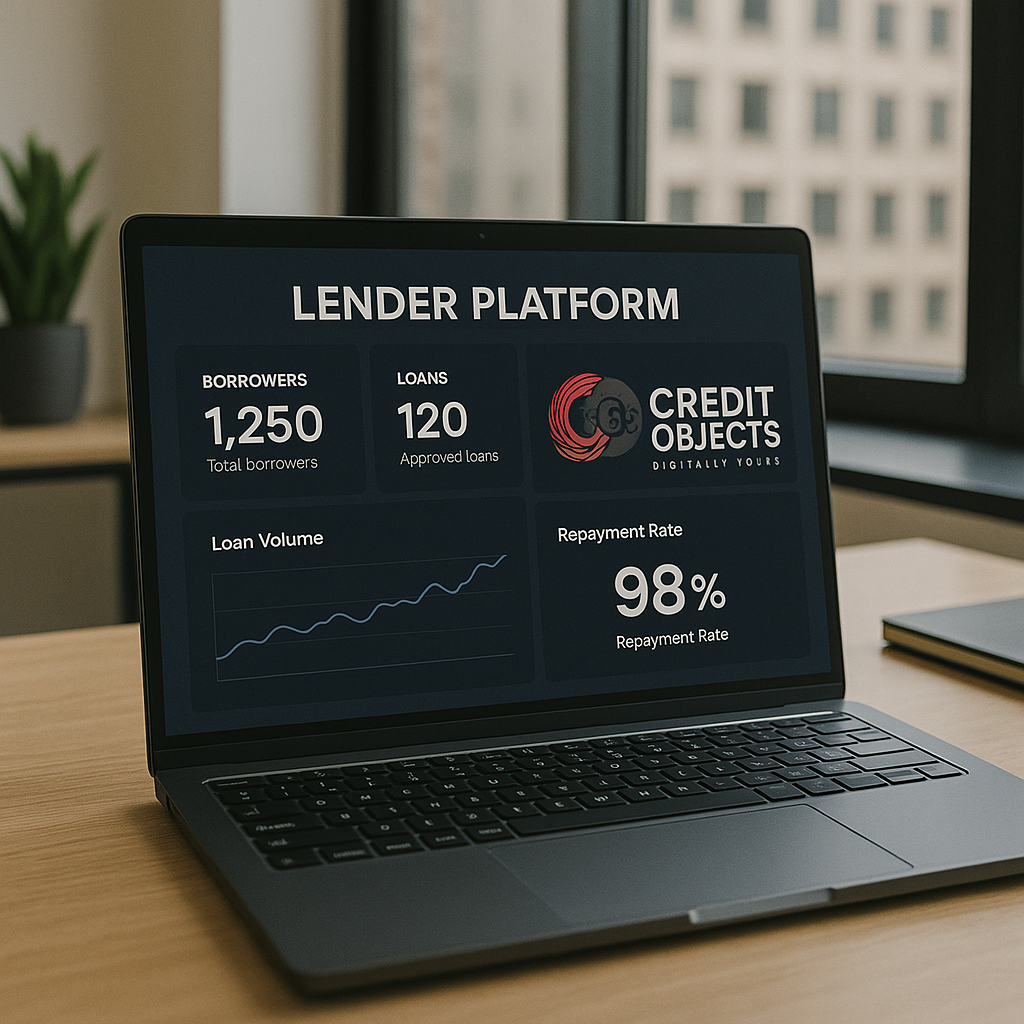
Credit Object’s lending software is one example worth noting. Our lending platform integrates origination, underwriting, servicing, and compliance within a unified workflow environment, which is the architectural approach that tends to reduce reconciliation gaps and improve audit readiness, particularly in dealer and broker-driven ecosystems.
More on our approach is available at creditobjects.com.au, and lenders assessing full lifecycle management capabilities can review the lending platform overview at creditobjects.com.au/lender-platform.
The distinction worth carrying away is architectural. Systems designed around lifecycle orchestration tend to age better than systems designed around a single function, because the business inevitably grows beyond that function.
Final Thought
Strip away the vendor language and an LMS is simply this: a structured, governed system that controls how loans are originated, assessed, managed, and monitored — in a way that is compliant, scalable, and operationally efficient.
For Australian consumer lenders, that means responsible lending compliance built into the process. For asset and commercial lenders, it means the scale and portfolio control that fragmented systems cannot provide.
In both cases, it becomes the system that holds the loan book together. And in modern lending, the loan book is the business.
